Guide 02 · Emergencies
What to do in the first five minutes.
Emergency call-outs are available seven days a week — but what you do before anyone arrives usually decides how much damage there is. This page is worth reading now rather than at ten o'clock on a Sunday night.
Read this one first
If you can smell gas, do not ring a plumber.
- 01Open doors and windows.
- 02Do not touch any electrical switch — on or off — and no naked flames or cigarettes.
- 03Turn the gas off at the meter control valve if you can reach it safely.
- 04Get everyone out of the building.
- 05Ring the National Gas Emergency Service on 0800 111 999. Free, 24 hours.
- 06Do not go back in until they say it is safe.
Once the emergency service has made it safe, that is the point at which a Gas Safe registered engineer puts it right. Ring Matt then.
Three situations
Do these, in this order.
A burst pipe or a leak you can’t stop
- 1Turn the water off at the internal stopcock. Usually under the kitchen sink, sometimes in a downstairs cloakroom, utility room or under the stairs.
- 2If water is anywhere near light fittings, sockets or the consumer unit, turn the electrics off at the main switch before you go near it.
- 3Open all the cold taps and flush the toilets to drain the pipes down — that empties the system and reduces what is still coming through.
- 4If it is a heating pipe, turn the boiler off too, and if you can find them, close the valves either side of the leak.
- 5Put buckets down, move what you can, and take a photo of where the water is coming from before you cover it up.
- 6Ring Matt on 07581 733592. If a ceiling is bulging with trapped water, stay out from under it.
No heating or hot water in cold weather
- 1Check the obvious first, and do not be embarrassed about it: is the thermostat calling for heat, is the timer on the right programme, has the boiler got power, and is it in summer mode.
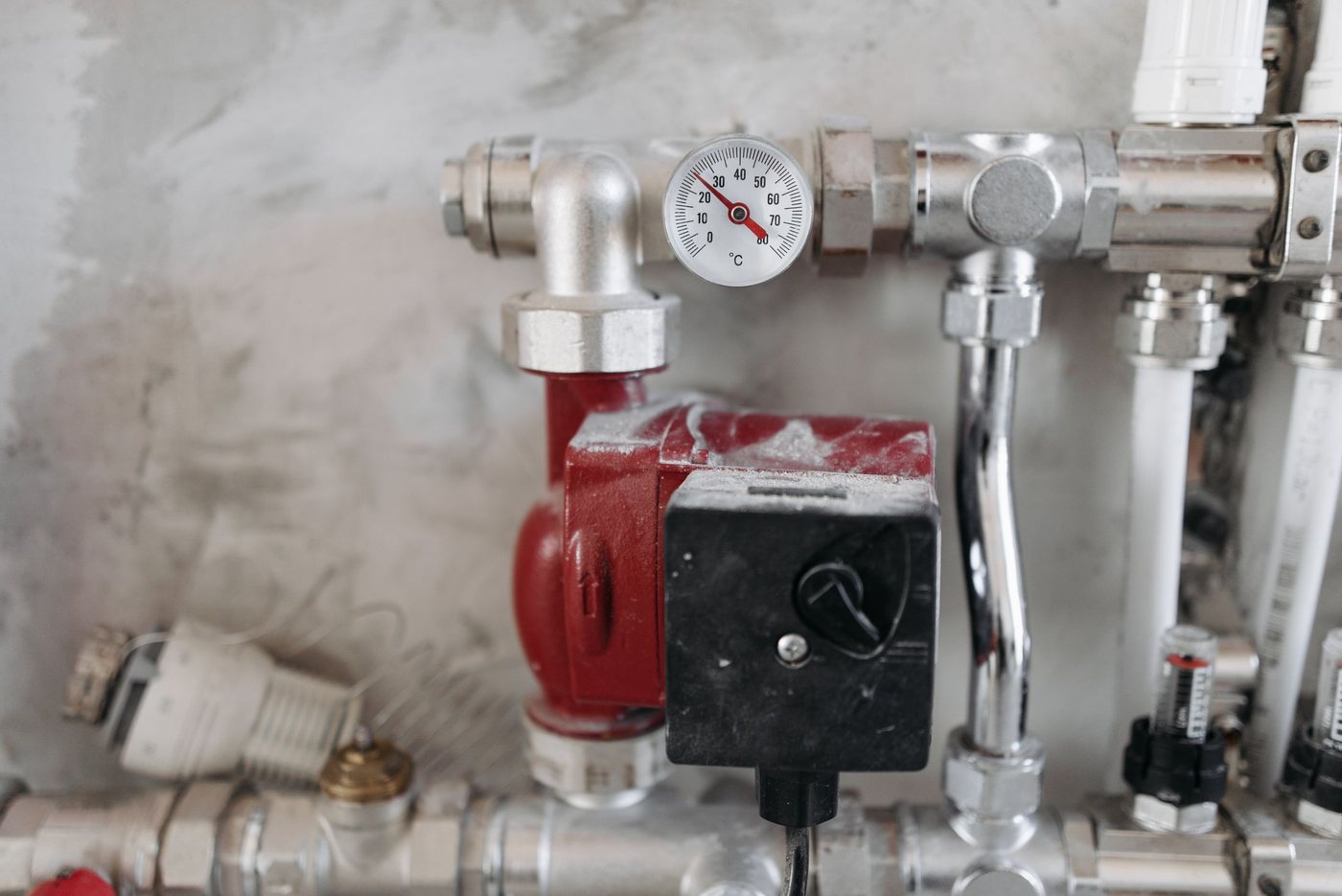
- 2Check the system pressure on the gauge. Most boilers want somewhere around 1 to 1.5 bar cold — very low pressure will stop the boiler firing.
- 3If there is a fault code on the display, write it down or photograph it. It tells the engineer more than a paragraph of description will.
- 4Reset the boiler once. If it locks out again, stop — repeated resets do not fix faults and on some of them it is not wise.
- 5In very cold weather with a frozen condensate pipe, a jug of warm — not boiling — water poured along the outside pipe will often free it.
- 6Ring, and say who is in the house. No heat is more urgent with a baby or an elderly person in the property, and that changes the order of the day.
A blocked or overflowing toilet
- 1Stop flushing. Every flush adds to the problem.
- 2Take the lid off the cistern and lift the float to stop the refill, or close the isolation valve on the supply pipe behind the WC.
- 3If the bowl is full and rising, that is a blockage downstream — check whether other appliances are also draining slowly, which points to the main run rather than the WC itself.
- 4Lift the nearest external drain cover if you can do it safely. Full chamber means the blockage is further along; empty means it is between the house and there.
- 5Do not tip drain chemicals into a full pan — you then have a pan full of caustic water for someone to work in.
- 6Ring, especially if it is the only toilet in the house.
Ten minutes, once
Find your stopcock before you need it.
The single most useful thing any household can do is locate the internal stopcock, check it turns, and make sure everyone in the house knows where it is. In a leak, the difference between knowing and hunting for it is usually the difference between a wet floor and a new ceiling.
- Look under the kitchen sink first; then downstairs cloakrooms, utility rooms, under the stairs, and airing cupboards.
- Turn it fully off and fully on again. Stopcocks that have not moved in fifteen years seize — better to find that out today.
- If it is seized, do not force it. Ring and have it replaced; it is a small job now and a big one during a flood.
- There is also an external stop valve, usually under a small cover at the boundary of the property, needing a long key.
- Tell everyone in the house. Put a label on it if you like — nobody has ever regretted that.
What actually counts as an emergency
Ring straight away
- · A leak or burst you cannot stop at the stopcock
- · Water near electrics
- · No heating or hot water in cold weather, especially with young children or elderly people at home
- · A boiler locked out and refusing to restart
- · The only toilet in the house out of action
Can wait for a booked visit
- · A dripping tap or a slow-filling cistern
- · One cold radiator in an otherwise working system
- · A shower that has lost a bit of pressure
- · Tiling, sealing and bathroom work
- · An annual service (book it in summer and everyone's life is easier)
Not sure which column you're in? Ring and describe it. Being told it can wait until Tuesday is a perfectly good outcome for a phone call.
Emergency call-outs, seven days a week.
Matt takes his own calls. For quotes and planned work, the best time is early morning or after 5pm — if he's under a floor he'll ring you straight back.